

Why Kenya Safari Camps Are Unfenced: What Travelers Need to Know
One of the first surprises for many travelers arriving at a Kenya safari camp is discovering that there may be no fence separating the accommodation from the surrounding wilderness.
There may be a tent.
There may be a wooden walkway.
There may be a dining area overlooking the bush.
But there may not be a large wall or fence keeping wildlife away.
For someone accustomed to hotels, this can feel unusual.
You might wonder:
What happens if an elephant walks through camp?
Can a buffalo approach your tent?
What about lions?
Is it safe to walk outside at night?
Why would a safari camp deliberately leave itself open to wildlife?
The answer is closely connected to the way many safari camps are designed and how they operate within natural ecosystems.
TipAn unfenced camp is not the same as an unprotected camp. Safety procedures are built around trained staff, controlled movement and understanding wildlife behavior rather than simply putting up a physical barrier.
Why Are Some Kenya Safari Camps Unfenced?
Traditional safari camps are often designed to blend into their surroundings rather than completely separate guests from the ecosystem.
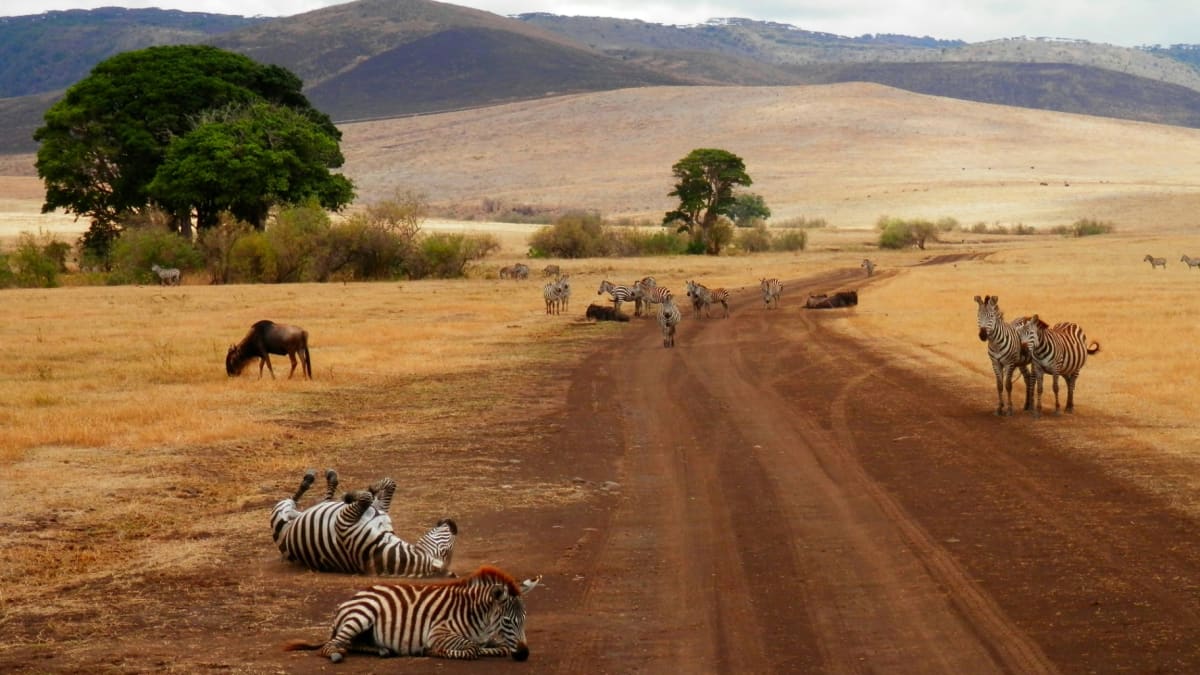
An unfenced property allows wildlife to move naturally through the landscape.
An elephant does not recognize the boundary of a lodge.
A zebra does not know that a campsite belongs to humans.
And a giraffe may simply walk past a tent because the area forms part of its natural range.
Instead of trying to create an artificial barrier, some camps operate around the movement of wildlife.
This creates a much more immersive safari experience.
Is an Unfenced Safari Camp Safe?
It can be, provided the camp has appropriate safety procedures and guests follow them.
The most important rule is simple:
Do not walk around the camp alone when staff have advised you to have an escort.
Wild animals are unpredictable.
Even animals that appear calm from a distance should be treated with respect.
Safari camps may have staff who understand:
- Local wildlife behavior
- Animal movement
- Safe walking routes
- Nighttime conditions
- Seasonal wildlife activity
- How to respond to animal encounters
Your camp should explain its safety procedures when you arrive.
Why Do You Need an Escort at Night?
After dark, the bush becomes a completely different environment.
Animals that are rarely seen during the day may become active.
You may hear:
- Hyenas calling
- Lions roaring
- Hippos vocalizing
- Night birds
- Insects
- Animals moving through vegetation
Even walking a short distance between your tent and the dining area can require an escort at some camps.
This is not intended to frighten guests.
It is a practical safety measure.
WarningNever assume that a short walk is safe simply because you cannot see wildlife nearby. Follow your camp's instructions, especially after dark.
Can Wild Animals Enter a Safari Camp?
Yes.
In an unfenced environment, wildlife may pass through camp.
You could potentially see animals such as:
- Elephants
- Giraffes
- Zebras
- Antelope
- Warthogs
- Monkeys
- Buffalo
- Hippos
- Hyenas
The exact animals you encounter depend on the camp's location and surrounding habitat.
The presence of wildlife is not necessarily a problem.
It is part of the experience of staying in a natural wildlife environment.
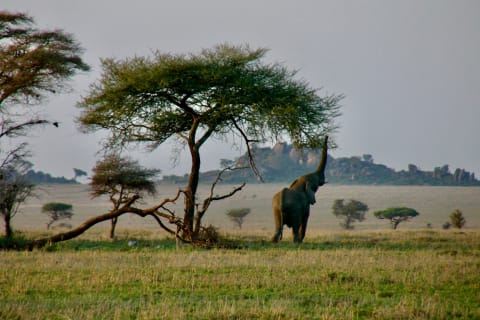
What Should You Do If You See an Elephant in Camp?
The safest response is to keep your distance and follow staff instructions.
Do not:
- Approach the elephant
- Try to photograph it from close range
- Block its path
- Make loud noises
- Attempt to touch it
- Follow it around camp
An elephant passing through camp should be allowed to continue on its way.
What If a Buffalo Comes Near the Camp?
Buffalo should be treated with particular caution.
They are large, powerful wild animals and should never be approached.
If staff tell you to remain inside your accommodation or wait for an escort, follow those instructions.
Do not attempt to get a photograph simply because the animal appears close enough for a dramatic shot.
Can Lions Walk Through an Unfenced Camp?
Wild predators can move through wider wildlife landscapes, and an unfenced camp does not create a physical wildlife barrier.
However, the exact likelihood of seeing a lion inside a particular camp varies considerably depending on location and circumstances.
If a potentially dangerous animal is nearby, camp staff will manage the situation according to their established procedures.
Guests should not attempt to investigate.
NoteHearing a lion outside your tent does not mean that the animal is standing next to your accommodation. Sound travels surprisingly far across open landscapes.
Why Would a Camp Choose Not to Have a Fence?
There are several reasons.
An unfenced design can:
- Allow wildlife to move naturally
- Preserve the character of the landscape
- Reduce artificial barriers
- Create a more immersive experience
- Support the idea of coexistence with wildlife
- Allow animals to use habitat around accommodation
For some travelers, this is one of the most memorable aspects of safari.
You are not simply visiting a wildlife park during the day and returning to an ordinary hotel at night.
You remain within the wider ecosystem.
What Is the Difference Between an Unfenced Camp and a Traditional Hotel?
A conventional hotel is designed around controlled human access.
A safari camp may be designed around coexistence with the surrounding environment.
That means your expectations should be different.
At a conventional hotel, you might walk to the restaurant whenever you want.
At an unfenced safari camp, you may need to wait for staff to accompany you.
At a city hotel, hearing an unfamiliar sound outside your room may be unusual.
At a safari camp, it could simply be part of the night's soundtrack.
Does Staying in an Unfenced Camp Mean You Are in Constant Danger?
No.
The purpose of the safety procedures is to manage the risk of being in a wildlife environment.
Guests are not expected to wander through the bush alone.
Staff may control movement between:
- Tents
- Main lodge
- Dining area
- Reception
- Vehicle parking area
- Camp activities
Following these procedures makes the experience much more manageable.
What Happens During a Wildlife Encounter Near Your Tent?
If an animal comes close to your accommodation, the correct response is to remain calm and follow camp instructions.
Depending on the situation, staff may:
- Ask you to remain inside
- Delay your departure
- Escort you elsewhere
- Monitor the animal
- Wait until it moves away
Do not try to turn the encounter into a personal wildlife experience.
The animal has not arrived for your photograph.
It is simply moving through its habitat.
Can You Hear Wildlife From Your Tent?
Yes.
This is one of the distinctive experiences of staying in the bush.
You may hear animals and birds at different times of the night.
Possible sounds include:
- Lion calls
- Hyena vocalizations
- Hippo grunts
- Elephant sounds
- Bird calls
- Insects
- Wind through vegetation
The sounds can be surprisingly loud.
For some travelers, this becomes one of the highlights of the trip.
Are Safari Tents Actually Safe?
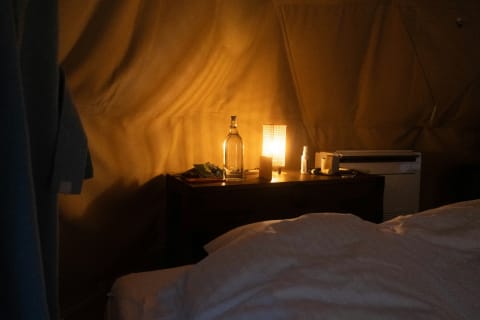
Safari tents can be very substantial structures.
Many have:
- Proper beds
- En-suite bathrooms
- Solid flooring
- Zipped entrances
- Furniture
- Lighting
- Storage
- Private decks
The word "tent" can create an inaccurate impression.
A modern luxury safari tent can feel very different from camping in a basic tent.
The important difference is that the accommodation is designed to exist within a natural environment.
What Should You Never Do at an Unfenced Camp?
Avoid these mistakes:
- Walking alone at night.
- Leaving your tent without following camp instructions.
- Approaching wildlife.
- Feeding animals.
- Leaving food outside.
- Making loud noises to attract wildlife.
- Following animals for photographs.
- Assuming small animals are harmless.
- Ignoring staff instructions.
- Treating the camp like an ordinary hotel.
The rules are simple because the environment is different.
Are Unfenced Camps Suitable for Families?
They can be, but parents should choose accommodation carefully.
Families should ask about:
- Minimum child age
- Walking arrangements
- Family accommodation
- Camp layout
- Child supervision
- Game-drive policies
- Meal arrangements
- Nighttime movement
Some properties are specifically designed for families, while others may have age restrictions or stricter safety policies.
Are Unfenced Camps Suitable for Honeymooners?
Yes.
In fact, many couples specifically choose unfenced camps because they offer a more immersive and intimate bush experience.
Imagine returning from a sunset game drive and hearing wildlife moving beyond your tent.
Or sitting at camp while watching elephants in the distance.
The attraction is not simply luxury.
It is the feeling of being surrounded by nature.
Why Wildlife Passing Through Camp Can Be a Good Thing
At first, seeing wildlife near your accommodation might sound dangerous.
But it can also demonstrate that the surrounding landscape remains connected.
An unfenced environment can allow animals to move between different areas without encountering a physical barrier.
This is particularly meaningful in landscapes where wildlife movement and habitat connectivity are important to conservation.
The camp becomes part of the environment rather than a completely separate space.
Does an Unfenced Camp Give You Better Wildlife Experiences?
It can create different experiences, but "better" depends on what you want.
A fenced property may provide a stronger sense of separation.
An unfenced camp can offer:
- More natural surroundings
- Wildlife sounds at night
- Occasional wildlife near camp
- A stronger sense of immersion
- A closer connection with the landscape
The actual quality of your safari will still depend on the destination, guide, season, accommodation and wildlife conditions.
How to Choose a Safe Unfenced Safari Camp
Before booking, ask your safari operator:
- Is the camp fenced or unfenced?
- What wildlife commonly passes through?
- Are escorts required after dark?
- How are guests transported around camp?
- What happens during animal encounters?
- Is the camp suitable for children?
- Does the property have trained night staff?
- What safety briefing is provided on arrival?
A reputable operator should be comfortable answering these questions.
Unfenced Camp vs Fenced Lodge
| Feature | Unfenced camp | Fenced lodge |
|---|---|---|
| Wildlife access to surrounding area | More open | More restricted |
| Bush atmosphere | Highly immersive | More controlled |
| Wildlife near accommodation | Possible | Usually more limited |
| Night movement | Often requires escort | May be less restrictive |
| Safety procedures | Strongly emphasized | Still important |
| Best for | Immersive safari experience | Travelers preferring separation |
| Wildlife sounds | Often very noticeable | Can be quieter |
Neither option is automatically better.
The choice depends on your comfort level and the type of safari atmosphere you want.
The Real Appeal of an Unfenced Safari Camp
An unfenced camp changes your relationship with the destination.
You begin noticing things you might otherwise miss.
The sounds become part of the experience.
The landscape feels closer.
You realize that the animals you watched during the game drive are still moving through the ecosystem after you return to camp.
That is the point.
You are not simply staying near wildlife. You are staying within a living landscape.
Frequently Asked Questions
Are Kenya safari camps safe if they are unfenced?
Can wild animals enter an unfenced safari camp?
Can I walk around an unfenced camp at night?
What should I do if I see wildlife near my tent?
Can elephants come into safari camps?
Are unfenced safari camps suitable for children?
Why don't safari camps simply build fences?
Is an unfenced safari camp better than a fenced lodge?
Experience the Kenyan Bush With ZikaraLink Travel
Choosing safari accommodation is about more than deciding between a tent and a lodge.
The location, camp design, wildlife environment, activities and safety procedures can all shape your experience.
ZikaraLink Travel can help arrange:
- Maasai Mara safari camps
- Conservancy stays
- Luxury safari tents
- Family safari accommodation
- Honeymoon safari camps
- Private Kenya safaris
- Wildlife-focused itineraries
- Safari and beach holidays
- Customized Kenya travel
- East Africa safari arrangements
If you want a safari that feels genuinely connected to the wilderness, an unfenced camp may be one of the most memorable accommodation choices you can make.
Just remember one rule:
Let the wildlife have the freedom. Follow the camp's rules, keep your distance and allow the bush to remain wild.