

Why Kenya Safari Roads Matter: How Terrain, Rain and Wildlife Change Your Game Drive
Why Are Safari Roads Different From Normal Roads?
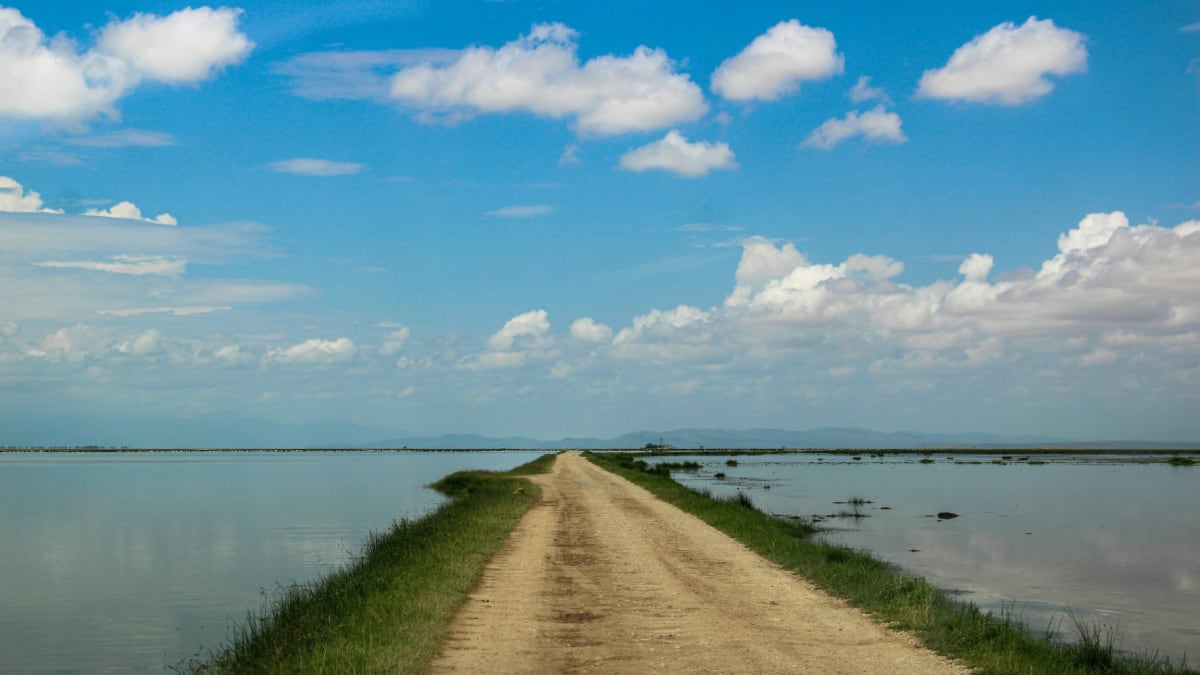
Safari vehicles often travel beyond conventional public roads.
Inside national parks, reserves and conservancies, vehicles may use designated tracks that cross natural landscapes.
These tracks are designed primarily to provide access rather than the smooth driving experience you might expect from a city road.
The route may pass through:
- Grassland
- Woodland
- River areas
- Hills
- Rocky terrain
- Sandy ground
- Seasonal wetlands
The vehicle therefore needs to handle changing conditions.
Does Road Condition Affect the Safari Experience?
Yes.
Road conditions can influence:
- Transfer times
- Vehicle comfort
- Game-drive routes
- Wildlife accessibility
- Departure times
- Fuel consumption
- Vehicle choice
- Seasonal itinerary planning
A destination that looks close on a map can take much longer to reach if the route includes rough terrain.
This is why experienced safari operators consider more than straight-line distance when planning an itinerary.
A 100-kilometre journey on a major highway is very different from a 100-kilometre journey across remote safari tracks.
The latter may require considerably more time because the vehicle must navigate uneven surfaces, wildlife crossings, waterlogged areas or sections where speed is naturally limited.
What Are Kenya's Safari Roads Like During the Dry Season?
During dry periods, some safari tracks can become dusty and firm.
Dust can be particularly noticeable when multiple vehicles use the same route.
You may encounter:
- Dry grass
- Dusty tracks
- Loose soil
- Rocky sections
- Deep vehicle ruts
The dry landscape can also make some routes easier to navigate.
However, dry does not automatically mean easy.
Some roads can remain rough throughout the year, while heavily used tracks may develop deep ruts and uneven surfaces.
What Happens to Safari Roads During the Rainy Season?
Rain can completely change the character of a safari track.
A route that feels firm during dry weather can become muddy after heavy rainfall.
You may encounter:
- Deep mud
- Slippery surfaces
- Standing water
- Soft ground
- Deep tyre tracks
- Eroded sections
- Temporary water crossings
This is one reason experienced safari guides pay close attention to local weather and road conditions.
The best route in the morning may not necessarily be the best route later in the day.
Heavy rainfall can also affect transfer times between destinations.
NoteSafari conditions can vary significantly even within the same destination. A wet day does not mean every road will be impassable, just as a dry day does not guarantee smooth driving.
Can Rain Stop a Kenya Safari?
Rain does not automatically mean that a game drive is canceled.
In many cases, safari activities can continue in wet weather.
Your experience may simply be different.
The landscape can become greener.
The air may feel cooler.
Clouds can create dramatic photography conditions.
Some animals may become more active after rainfall.
However, severe weather or difficult road conditions can require a guide to change the route or postpone part of a drive.
Safety should always come before reaching a particular wildlife sighting.
Why Do Safari Vehicles Feel Bumpy?
Safari vehicles are built for access and durability rather than perfectly smooth driving.
You may experience:
- Bumps
- Vibrations
- Uneven surfaces
- Sudden turns
- Slow climbs
- Descents
- Corrugated tracks
- Rocky sections
This is a normal part of many safari experiences.
The level of roughness depends heavily on the destination and the route being used.
If you are traveling with young children, older travelers or anyone who prefers a more comfortable ride, mention this when planning your itinerary.
Your operator may be able to recommend routes, vehicles and travel schedules that better match your needs.
Why Is a 4x4 Safari Vehicle Important?
A capable 4x4 vehicle can provide better access across varied terrain than an ordinary road vehicle.
This can be particularly useful when traveling through:
- Mud
- Loose soil
- Rocky tracks
- Uneven ground
- Steep sections
- Wet areas
But having four-wheel drive does not mean that every road is always passable.
Extreme conditions can affect even capable vehicles.
The experience and judgment of the driver are equally important.
A skilled safari driver knows when to slow down, when to avoid a particular section and when another route is safer.
Safari Van or 4x4 Land Cruiser: Which Is Better?
Both safari vans and 4x4 Land Cruisers are used in Kenya.
The right choice depends on the destination, itinerary and travel style.
| Safari vehicle | Best suited for | Key consideration |
|---|---|---|
| Safari van | Established safari routes and budget-conscious travelers | Usually lower cost |
| 4x4 Land Cruiser | Varied or rough terrain | Greater flexibility |
| Private 4x4 | Couples, families and photographers | More control over the itinerary |
| Shared 4x4 | Small groups | Balance between capability and cost |
Do not choose a vehicle based solely on appearance.
Ask where it will be used, whether it is private or shared and what is included in the safari package.
How Road Conditions Affect Game-Drive Time
Road conditions can affect how long you spend traveling between wildlife areas.
If a route is particularly rough, your driver may reduce speed.
If a section becomes muddy, the vehicle may need to take an alternative route.
If wildlife is crossing the road, the vehicle may stop completely.
This means safari schedules should have some flexibility.
A game drive is not a normal road trip where every minute can be predicted.
The landscape itself determines part of the timetable.
Why Safari Drivers Sometimes Take the "Long Way"
You may look at a map and wonder why your driver is not taking the shortest route.
There can be several reasons.
The shortest route may be:
- Too muddy
- Too rocky
- Temporarily flooded
- Restricted
- Unsuitable for the vehicle
- Less productive for wildlife viewing
A longer route may provide better access or better opportunities for wildlife sightings.
Your guide is usually making decisions based on current conditions rather than simply following the shortest line on a map.
How Wildlife Changes the Road Journey
Safari roads are not just transportation routes.
They are part of the wildlife environment.
Animals can cross them at any moment.
You may encounter:
- Elephants walking across the track
- Zebras standing beside the road
- Giraffes crossing ahead
- Buffalo near a track
- Antelope moving between grazing areas
- Birds feeding along the roadside
Your driver may slow down or stop to allow animals to pass.
This is one of the major differences between a safari drive and an ordinary road journey.
Why Roadside Wildlife Can Be Worth Waiting For
It is easy to assume that the best wildlife encounters happen deep inside a reserve.
That is not always the case.
An animal may appear beside the track unexpectedly.
A herd may decide to cross directly in front of your vehicle.
A predator may use the road as an easy walking route.
If your driver stops because an animal is approaching, patience can be rewarded.
The best moment may happen several minutes after the initial sighting.
How Dust Affects Your Safari Experience
Dust is one of the most noticeable features of some dry-season safari drives.
It can affect:
- Visibility
- Photography
- Clothing
- Luggage
- Camera equipment
- Vehicle interiors
If you are sensitive to dust, consider carrying a lightweight face covering or scarf.
Keep cameras and electronics protected when they are not being used.
A small dry bag or protective pouch can be useful for keeping dust away from sensitive equipment.
What Should You Wear on a Dusty Game Drive?
Safari clothing does not need to be complicated.
Practical choices include:
- Lightweight trousers
- Comfortable shirts
- Closed shoes
- A light jacket
- Hat
- Sunglasses
Neutral and earthy colors are often practical for safari environments.
More importantly, choose clothing that you do not mind getting dusty.
A pristine white outfit may look great at breakfast but can look very different after several hours on a dusty track.
Why Early-Morning Roads Can Feel Different
Early morning game drives can be cooler than travelers expect.
The road may still be damp from overnight conditions.
Visibility can change as the sun rises.
Animals may also be active during the cooler hours.
This combination can make early drives feel completely different from afternoon drives.
Carry a light warm layer even when daytime temperatures are expected to be high.
What Happens When a Safari Track Has Deep Ruts?
Repeated vehicle traffic can create ruts in some tracks.
These depressions can become more noticeable after rainfall.
A skilled driver may approach them at an angle or choose another route depending on the conditions.
This is another reason why experienced local drivers are valuable.
Driving on safari is not simply about knowing how to operate a 4x4.
It involves reading the terrain.

Can Road Conditions Affect Safari Photography?
Absolutely.
Rough roads can make it harder to photograph while the vehicle is moving.
Dust can reduce clarity.
Sunlight can change quickly.
An animal may appear on the side of the vehicle where you have the least convenient angle.
The solution is not necessarily better equipment.
It is preparation.
Keep your camera accessible.
Know your basic settings.
Keep your lens clean.
And be ready to photograph when the vehicle stops.
Should You Expect Long Driving Days?
It depends on the itinerary.
A safari that combines several destinations may involve longer transfers between parks.
A slower itinerary may reduce the amount of time spent on the road and give you more time at each destination.
For many travelers, this is an important distinction.
You are not simply choosing destinations.
You are choosing how much time you want to spend traveling between them.
TipIf you prefer relaxed travel, fewer destinations with longer stays can be more enjoyable than trying to cover every famous park in one trip.
How to Build a Safari Around Road Conditions
When planning your itinerary, consider:
- Distance between destinations
- Road conditions
- Season
- Vehicle type
- Transfer times
- Number of nights per destination
- Internal flights
- Game-drive schedules
- Your tolerance for long drives
A well-designed itinerary does not simply connect famous destinations.
It considers how those destinations actually connect on the ground.
When Should You Consider Flying Between Safari Destinations?
Domestic flights can be useful when you want to reduce long overland transfers.
They can be particularly attractive for travelers with limited time.
For example, instead of spending a large portion of a day traveling between distant destinations by road, a traveler may choose a scheduled or chartered flight where available.
This can allow more time for:
- Game drives
- Rest
- Photography
- Activities at camp
- Exploring a destination
The best option depends on your budget and itinerary.
Are Kenya Safari Roads Safe?
Safari operators use vehicles and routes suited to the destinations they operate in.
However, road conditions can change.
Rain, flooding, erosion, wildlife and other environmental factors can affect travel.
Your driver or guide should make decisions based on current conditions.
Travelers should also follow instructions inside the vehicle.
Do not stand or move around unnecessarily while the vehicle is moving.
Always follow your guide's instructions when wildlife is nearby.
Why Local Knowledge Matters More Than a Map
A digital map can tell you where a road appears to go.
It cannot always tell you:
- Whether the track is currently muddy
- Whether water has crossed the road
- Whether a route is practical for your vehicle
- Whether wildlife is currently using the area
- Whether a particular track is seasonally difficult
Local knowledge fills in that gap.
This is one of the reasons choosing an experienced Kenya safari operator can make the journey considerably easier.
The Road Is Part of the Safari
One of the easiest mistakes is to think of the road as something you simply have to endure before reaching the wildlife.
In reality, the road is part of the experience.
It takes you through landscapes that you would otherwise never see.
It can lead to unexpected wildlife encounters.
It can reveal changing weather.
It can show you how dramatically the Kenyan landscape changes from one region to another.
Sometimes the most memorable moment of a game drive happens between the places you originally planned to visit.
Frequently Asked Questions
Are Kenya safari roads very rough?
Do I need a 4x4 for a Kenya safari?
Are safari vans suitable for Kenya?
Does rain make a Kenya safari difficult?
Can road conditions change during the same day?
Do safari roads affect wildlife sightings?
Should I expect a bumpy ride on safari?
Is flying better than driving between Kenya safari destinations?
Plan a Kenya Safari That Matches the Roads, Season and Wildlife
A successful safari itinerary is about more than choosing famous parks.
It is about understanding how destinations connect, how weather affects travel and how much time you actually want to spend on the road.
ZikaraLink Travel can help travelers plan:
- Private Kenya safaris
- Shared safari tours
- 4x4 safari experiences
- Maasai Mara safaris
- Amboseli safaris
- Tsavo safaris
- Safari and beach holidays
- Customized Kenya itineraries
- Multi-destination East Africa journeys
- Airport and ground transfers
Whether you want a short wildlife escape or a longer Kenya adventure, the right itinerary should match your preferred pace, budget and travel style.
Tell us your travel dates, number of travelers and preferred destinations, and we can help create a practical Kenya safari itinerary around your plans.