

Kenya Safari Photography Guide: Best Camera Gear, Seats, Settings and Wildlife Tips
Kenya is one of the world's most exciting destinations for wildlife photography.
The combination of open savannah, dramatic skies, large mammals, predators and changing light creates endless photographic opportunities.
But getting great safari photographs is not simply about owning an expensive camera.
Good wildlife photography on safari depends on preparation, patience, positioning, light and understanding animal behavior.
You may have the perfect camera and still miss the shot because a lion turns away at the wrong moment.
Another day, your simplest photograph may become your favorite because the light, landscape and animal behavior come together perfectly.
This guide explains how to prepare for wildlife photography in Kenya and make better use of your time in the safari vehicle.
Why Kenya Is Excellent for Wildlife Photography
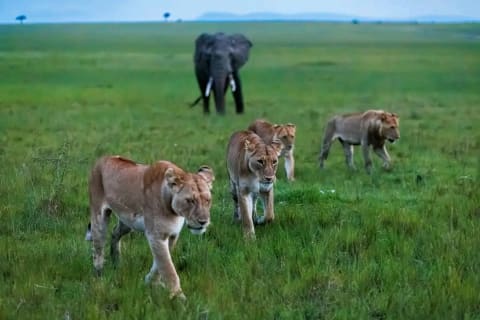
Kenya offers a remarkable variety of photographic subjects.
Depending on your destination and season, you may photograph:
- Lions
- Leopards
- Cheetahs
- Elephants
- Giraffes
- Zebras
- Wildebeest
- Buffalo
- Rhinos
- Hippos
- Birds
- Landscapes
- Local communities and cultural experiences
The variety means you do not need to photograph only big cats.
A herd of elephants moving through golden grass can create a powerful image.
So can a giraffe silhouetted against the sunrise.
What Camera Should You Take on Safari?
You do not need a professional camera to enjoy safari photography.
A modern smartphone can produce excellent images in good light.
For dedicated wildlife photography, however, an interchangeable-lens camera provides more control.
Possible options include:
- Mirrorless camera
- DSLR camera
- Bridge camera
- High-end smartphone
The most important consideration is not simply the camera body.
The lens can make a much bigger difference when animals are far away.
What Lens Is Best for a Kenya Safari?
A telephoto lens is one of the most useful pieces of safari photography equipment.
Popular focal lengths can include:
- 70–200mm
- 100–400mm
- 200–500mm
- 150–600mm
A longer lens can help you photograph distant animals without needing the vehicle to move closer.
However, extremely long lenses can make it harder to photograph large animals when they are close.
This is why a flexible zoom lens can be particularly useful.
Do You Need a Wide-Angle Lens?
Yes, if you want more than close-up wildlife portraits.
Wide and standard lenses can be excellent for:
- Landscapes
- Herds
- Animals in their environment
- Safari vehicles
- Sunrises
- Sunsets
- Camp scenes
- Environmental portraits
Some of the strongest safari photographs show the animal as part of the landscape rather than filling the entire frame.

Should You Bring Two Cameras?
Serious wildlife photographers may prefer two camera bodies.
This can allow you to keep:
- A telephoto lens on one camera
- A wider lens on another
You can switch perspectives quickly without changing lenses in a dusty environment.
However, this is optional.
For most travelers, one camera body and one versatile telephoto lens are enough.
What Camera Settings Should You Use?
There is no single perfect safari photography setting.
Wildlife moves quickly, while lighting conditions can change throughout the day.
A useful starting point is:
| Setting | Suggested starting point |
|---|---|
| Shooting mode | Aperture priority or manual |
| Shutter speed | Fast for moving animals |
| ISO | Auto or adjusted to light |
| Autofocus | Continuous autofocus |
| Drive mode | Burst shooting |
| File format | RAW if available |
| Stabilization | On when appropriate |
These are starting points rather than strict rules.
Your settings should change according to the animal and available light.
Shutter Speed for Wildlife Photography
Shutter speed becomes particularly important when animals are moving.
A slow shutter speed can produce motion blur.
For active wildlife, photographers often prefer faster shutter speeds.
You may need higher shutter speeds when photographing:
- Running cheetahs
- Birds in flight
- Lions hunting
- Animals fighting
- Elephants walking quickly
- Birds taking off
For slower animals, you may be able to use a lower shutter speed.
Aperture and Background Blur
A wide aperture can help separate an animal from a distracting background.
This can create the classic wildlife portrait where the animal appears sharp while the grass and trees behind it become soft.
However, extremely wide apertures can produce a shallow depth of field.
If the animal is angled toward you, parts of its face may fall outside the focus area.
The ideal aperture therefore depends on:
- Animal distance
- Lens
- Light
- Subject movement
- Desired depth of field
ISO on Safari
Lighting can change dramatically during a game drive.
Early morning and late afternoon may require higher ISO settings than bright midday conditions.
Modern cameras can handle higher ISO values better than older equipment, so do not be afraid to increase ISO when necessary.
A sharp photograph with some digital noise is usually better than a blurry photograph taken at a lower ISO.
TipPrioritize shutter speed when photographing moving wildlife. A slightly noisy sharp image is usually easier to improve than an image ruined by motion blur.
RAW or JPEG for Safari Photography?
If your camera supports RAW, it can be useful for serious photography.
RAW files retain more information for editing exposure, highlights, shadows and white balance.
JPEG files are smaller and ready to use immediately.
For casual travel photography, JPEG may be perfectly adequate.
For photographers planning to edit their images, RAW provides greater flexibility.
Where Should You Sit in a Safari Vehicle?
Your seat can affect your photography opportunities.
In a shared vehicle, you may not always control where you sit.
In a private vehicle, you have more flexibility.
Ideally, you want:
- Clear window access
- Minimal obstruction
- Space for your camera
- Good visibility
- A comfortable position for long game drives
If photography is a major priority, tell your safari operator before booking.

Is a Private Safari Better for Photographers?
It can be.
A private safari vehicle gives you greater control over:
- Positioning
- Time spent at sightings
- Route
- Departure times
- Photography stops
- Number of passengers
This can be particularly valuable when photographing wildlife.
For example, you may want to spend forty minutes watching one leopard while another traveler might prefer to continue searching for elephants.
A private vehicle gives your group more freedom to make that decision.
The Importance of Your Safari Guide
A knowledgeable guide can make a major difference to wildlife photography.
A good guide may understand:
- Animal behavior
- Where particular species are commonly found
- How animals react to vehicles
- How to position the vehicle
- Lighting conditions
- Tracks and signs
- Wildlife movement
Tell your guide that photography is important to you.
If you are interested in specific subjects, such as predators or birds, mention this before the game drive.
Photographing Animals at Eye Level
Whenever possible, think about your camera angle.
An image taken from a lower perspective can create a stronger connection with the animal.
The height of your safari vehicle naturally affects this.
You should never compromise safety by trying to get lower or leaving the vehicle.
Instead, work with the position available.
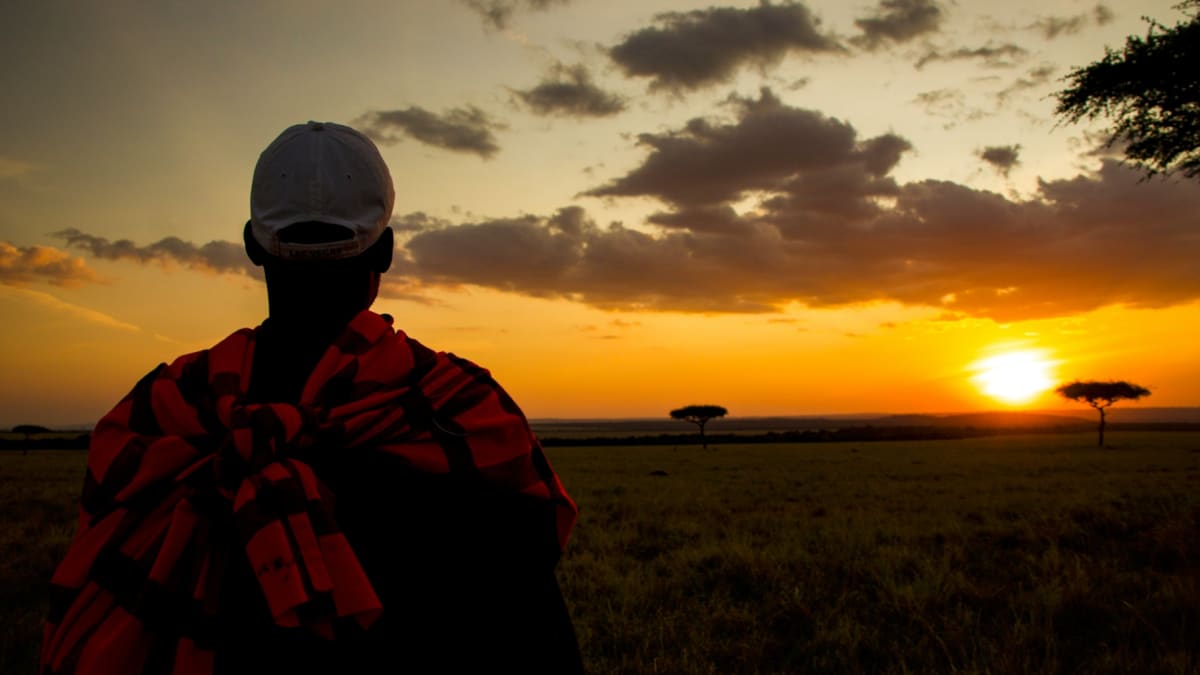
Photographing Wildlife in Golden Light
Early morning and late afternoon can provide beautiful warm light.
This can create:
- Warm fur tones
- Long shadows
- Backlighting
- Silhouettes
- Golden grass
- Dramatic skies
Do not assume that midday is the only useful time for photography.
Some of the most atmospheric safari photographs happen when the sun is low.
Do Not Ignore the Sky
Kenya's landscapes can be as photogenic as the wildlife.
Clouds can add drama to a photograph.
Storms can create powerful contrasts between dark skies and sunlit plains.
When you see an interesting sky, consider including more of it in the frame.
The result can tell a bigger story about the environment.
Photographing the Big Five
The phrase "Big Five" traditionally refers to:
- Lion
- Leopard
- Elephant
- Buffalo
- Rhino
Photographing all five is a popular safari goal.
However, each presents different photographic challenges.
Lions
Lions are often relatively relaxed during the heat of the day.
Early morning and late afternoon can provide more interesting light and behavior.
Leopards
Leopards can be difficult to spot because they are often concealed by vegetation or trees.
A long lens can be particularly useful.
Elephants
Elephants offer opportunities for both close portraits and environmental photographs.
Try photographing individuals as well as entire herds.
Buffalo
Buffalo can create powerful group photographs because of their numbers and distinctive shapes.
Rhinos
Rhinos can sometimes be photographed against open landscapes, creating strong environmental portraits.
Photographing Birds on Safari
Kenya is also an excellent destination for bird photography.
You may encounter:
- Eagles
- Vultures
- Kingfishers
- Herons
- Storks
- Ostriches
- Hornbills
- Secretary birds
Bird photography often requires faster shutter speeds and longer lenses.
If birds are a priority, tell your guide.
How to Photograph Wildlife Without Disturbing It
The best photograph is never worth disturbing an animal.
Avoid:
- Shouting
- Flashing lights unnecessarily
- Chasing animals
- Asking the driver to get dangerously close
- Blocking an animal's path
- Making noises to attract attention
Observe first.
Photograph second.
WarningNever ask your guide to break wildlife rules for a photograph. A responsible wildlife encounter is more valuable than getting a slightly closer image.
Safari Photography Mistakes to Avoid
Common mistakes include:
- Using a shutter speed that is too slow.
- Carrying only a very long lens.
- Forgetting spare batteries.
- Running out of memory-card space.
- Ignoring the background.
- Photographing every animal at the same focal length.
- Forgetting landscape compositions.
- Spending the entire safari looking through the viewfinder.
- Using flash unnecessarily.
- Focusing only on the Big Five.
Sometimes the best photograph is the one you almost missed because you were watching the scene instead of photographing it.
Essential Safari Photography Equipment
| Equipment | Importance |
|---|---|
| Camera | Essential for dedicated photography |
| Telephoto lens | Very useful for distant wildlife |
| Wide or standard lens | Useful for landscapes and environmental shots |
| Spare batteries | Highly recommended |
| Extra memory cards | Highly recommended |
| Lens cloth | Useful in dusty conditions |
| Camera bag | Protects equipment |
| Power bank | Useful for charging accessories |
| Binoculars | Helpful even if you have a camera |
| Rain protection | Useful during wet conditions |
How to Protect Your Camera From Dust
Safari environments can be dusty, particularly during dry periods.
Simple precautions include:
- Keep the camera covered when not in use.
- Avoid unnecessary lens changes.
- Carry a lens-cleaning cloth.
- Use a camera bag.
- Protect equipment during dusty road transfers.
- Clean equipment carefully rather than rubbing dust aggressively across the lens.
If you need to change lenses, do so as quickly and carefully as practical.
Should You Bring a Tripod?
A full tripod is often inconvenient inside a safari vehicle.
A monopod or beanbag-style support may be more practical depending on your equipment and vehicle.
However, many travelers can comfortably handhold modern camera equipment.
Ask your safari operator about vehicle configuration before deciding what support equipment to bring.
The Best Safari Photograph Is Not Always the Closest One
One of the most important lessons in wildlife photography is to stop chasing proximity.
A photograph can be powerful because of:
- Composition
- Light
- Behavior
- Emotion
- Landscape
- Timing
- Atmosphere
A distant elephant beneath a dramatic sky can tell a stronger story than a close-up elephant portrait.
Think beyond the animal.
Think about the entire scene.
Frequently Asked Questions
What camera is best for a Kenya safari?
What lens should I take on a Kenya safari?
Is a private safari better for photography?
What shutter speed should I use for wildlife?
Do I need a professional camera for Kenya?
Can I use my smartphone on safari?
Should I bring binoculars if I have a telephoto lens?
Can I use flash photography on safari?
Plan a Kenya Wildlife Photography Safari With ZikaraLink Travel
A photography-focused safari requires more than simply adding a camera to your packing list.
The destination, accommodation location, vehicle type, guide, number of travelers and amount of time spent in the field can all influence your photography opportunities.
ZikaraLink Travel can help organize:
- Private photography safaris
- Maasai Mara photography trips
- Wildlife-focused itineraries
- Private safari vehicles
- Conservancy experiences
- Big Five safaris
- Birdwatching safaris
- Kenya safari and beach holidays
- Customized photography itineraries
Bring your camera, but remember to put it down occasionally.
Some of the best safari memories are the moments you experience before you press the shutter.